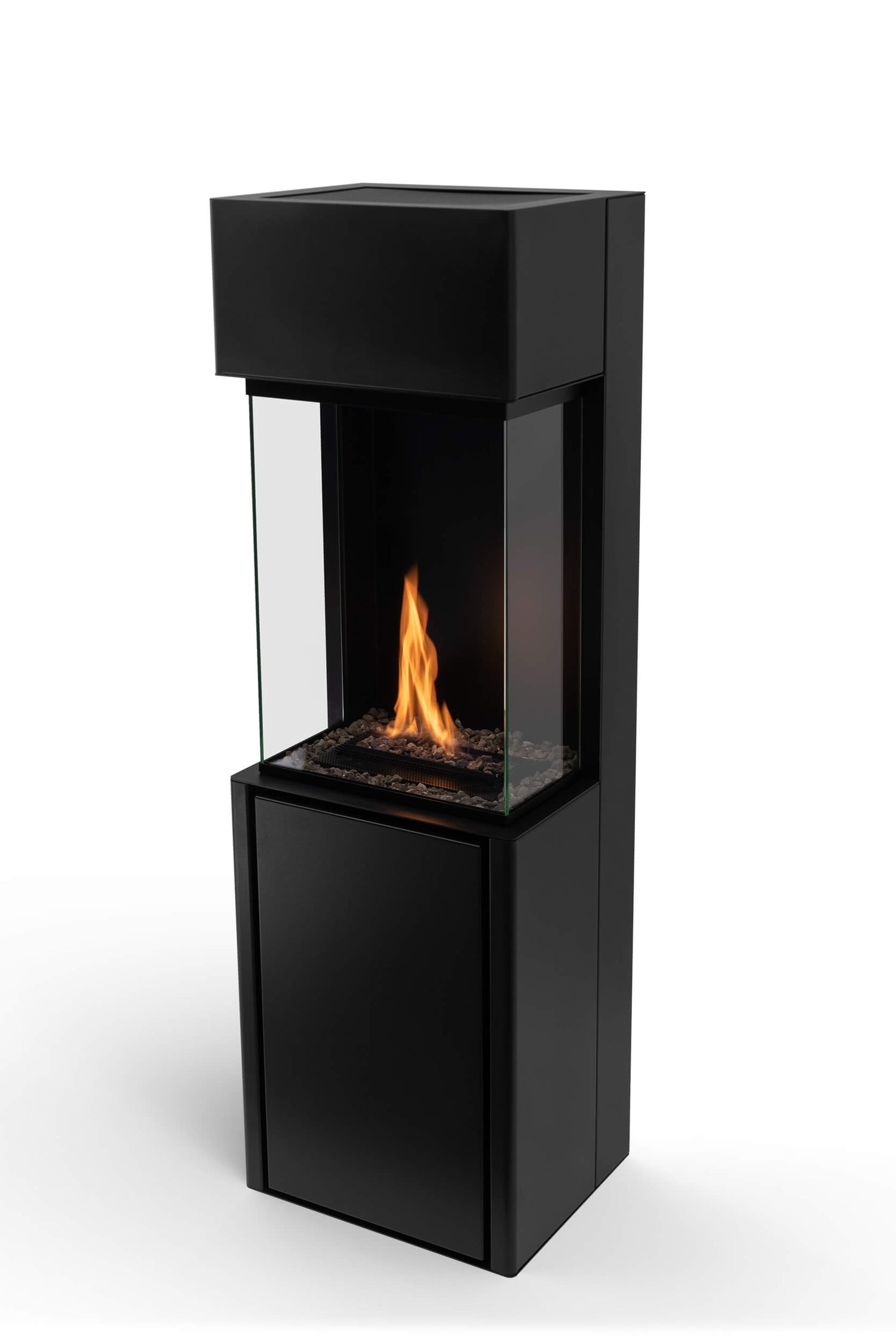

Do You Need a Chimney? Flueless Bioethanol Fireplaces Explained
If your home doesn't have a chimney, you might think a real fire is impossible. No flue means no wood burner, gas fire or coal fire. And electric fires, while convenient, don't give you the real flames and warmth of a real fire.
But there is another option - one that gives you real flames, real heat, and a real fireplace atmosphere without needing a chimney, flue, or ventilation system of any kind - a true fireplace without a chimney.
A bioethanol fireplace is completely flueless. It burns liquid bioethanol fuel so cleanly that it produces no smoke, soot, or ash. The only by-products are minimal water vapour and a small amount of carbon dioxide - roughly the same as burning a few candles. No chimney is needed. No flue is required. No builder is needed to knock holes in your walls.
In this guide, we explain exactly how flueless bioethanol fireplaces work, why they are safe, and which models are best for homes without chimneys - whether you live in a flat, new build, or modern home with no fireplace.
What Does Flueless Actually Mean?
Most people understand that a chimney removes smoke and noxious gases from a fire. Wood burners, open fires, and gas fires all need a chimney or flue to carry away the fumes, smoke, and harmful gases produced during combustion. Without one, these fires would fill your home with smoke and carbon monoxide.
A flueless fireplace does not need this because the fuel burns so cleanly that almost nothing harmful is produced. Bioethanol is a plant-based alcohol made from fermented crops such as corn, sugar cane, and potatoes. When it burns, the chemical reaction is simple and clean:
Bioethanol + Oxygen → Water vapour + Carbon dioxide + Heat
There is no smoke. No soot. No ash. No creosote. No carbon monoxide. And because there is no smoke, there is nothing that needs to be carried away through a chimney.
The only requirements are fresh air in the room (which most rooms have naturally) and a minimum room size to ensure the small amount of CO₂ doesn't accumulate.
How Do Flueless Bioethanol Fires Work?
Planika's automatic bioethanol burners use BEV Technology (Burning Ethanol Vapours). The bioethanol fuel is heated to create vapour, which is then ignited. This produces clean, controlled flames that look and behave like a gas or wood fire - but without any of the mess or chimney requirements.
The flames are real and you can feel the heat that the flames generate. They cast the same warm glow and moving shadows as a traditional fire. The only difference is what comes out of the top: warm air and a tiny amount of water vapour, instead of smoke.
What You Need for Installation
Unlike a wood burner - which needs a chimney liner, hearth, and building regulations approval - a flueless bioethanol fireplace needs almost nothing:
- No chimney or flue - Not required at all
- No gas connection - Bioethanol is liquid fuel, contained within the burner
- No ventilation system - Standard room air is sufficient
- Standard electrical socket - For automatic burners (FLA4, FLA4+, Primefire, Neo)
- Minimum room size - Typically 59-94 cubic metres depending on the burner (59m³ for the Neo 1000, 70m³ for the FLA4 990 and Primefire 990, 94m³ for the FLA4 1190)
Most UK living rooms are well above this minimum. A typical 4m × 5m room with 2.5m ceilings has 50 cubic metres of air - enough for a small automatic burner.
Are Flueless Bioethanol Fires Safe?
This is the most common question we hear from customers - and it's a fair one. If a fire doesn't have a chimney, how do you know the fumes are safe?
The answer lies in the chemistry and the engineering.
The Chemistry: Why Bioethanol is Different
When bioethanol burns cleanly, it does not produce carbon monoxide (CO) - the dangerous gas that makes chimneys essential for wood and gas fires. The combustion is complete, meaning the fuel turns entirely into CO₂, water vapour and heat.
The amount of CO₂ produced is small. A Planika FLA4 990 bioethanol burner running at full flame for one hour produces roughly the same CO₂ as two adults breathing in that same room for the same period. It is not zero - but it is minimal and safe in a properly sized room.
The Engineering: Planika Safety Features
Planika automatic bioethanol burners include multiple safety systems:
- CO₂ sensors - Monitor air quality and shut down the burner if levels rise
- Automatic shut-off - If the burner tips, overheats, or detects a fault
- Child locks - Prevent accidental ignition or adjustment
- Overfill protection - Electronic pump prevents dangerous overfilling of fuel tank For cased fireplaces like the Planika Forma range, there is an additional layer of safety. The engineered casing contains the heat, deflects it forward into the room, and maintains safe temperatures on the surrounding wall surfaces. The low glass riser in front of the burner bar prevents accidental contact with the hot burner.
Comparison: Bioethanol vs Gas Flueless Fires
Gas flueless fires do exist, but they are very different from bioethanol. Gas flueless fires require:
- A permanent ventilation grille in the wall (often unsightly)
- Minimum room sizes of 30-40 cubic metres (similar to bioethanol)
- Installation by a Gas Safe engineer
- Annual servicing by a Gas Safe engineer
- Strict building regulations compliance
Bioethanol flueless fires require none of these. No ventilation grille. No annual servicing. No Gas Safe certificate. And importantly, no risk of carbon monoxide because bioethanol does not produce it.
Can I Have a Real Fire Without a Chimney?
Yes - and it is not a compromise. A bioethanol fire gives you:
- Real orange and yellow flames - Not LEDs, not water mist, not a screen
- Real heat output - 2kW to 20kW, depending on the model, enough to warm a living room
- Real atmosphere - The flicker, the shadows, the warmth on your face
- No fake elements - What you see is real flames
The only difference between a bioethanol fire and a wood burner is what goes up the chimney - with bioethanol, there is no chimney because there is no smoke. The fire itself is just as real.
Best Flueless Bioethanol Fireplaces for Homes Without Chimneys
For Flats and Apartments
Living in a flat often means no chimney or flue, no fireplace recess, and no option for structural changes. A flueless bioethanol fire solves this completely.
Planika Cool Flame Water Vapour Inserts
If you want the safest possible option for a flat or a bedroom, the Planika Cool Flame range uses water vapour and LED lights to create a realistic flame effect with zero heat. The "flames" are cool to the touch - safe for children and pets. No fuel, no combustion, no heat, and no chimney needed. Just plug into a socket. Compared to a standard electric fire, the water vapour fire offers a more realistic flame.
For Media Walls
The media wall is the most popular home improvement trend for chimney-free homes in the UK right now - a full-wall feature combining a television, storage, and a fireplace. But most media walls are built in homes without chimneys.
Planika Forma 1200 with FLA4 990
The Planika Forma 1200 with FLA4 990 is the ultimate media wall solution. The zero-clearance casing means your builder can use standard timber and plasterboard right up to the unit edges. The built-in heat deflection protects your TV mounted above. The FLA4 990 burner gives you six flame stages, Wi-Fi control via the Planika app, and 8 hours of burn time.
At £7,635.60, it is a premium option — but it includes everything: casing, glass, burner, and built-in safety clearances. No custom building. No heat calculations. No specialist installer. Just a straightforward media wall appliance.
Planika Forma 1200 with Primefire 990
For a more budget-friendly media wall option, the Planika Forma 1200 with Primefire 990 offers the same zero-clearance casing with a simpler 3-stage burner. At £5,594.40, it delivers real flames, real heat, and safe TV mounting for less.
Planika Neo Fireplace 1000
The ideal entry-level media wall fireplace is the Planika Neo Fireplace 1000 and is ideal for occasional use for a couple of hours in front of the TV. It produces up to 5.9kW of heat and burns for up to 4 hours on a single fill, depending on flame level.
For Large Rooms and Open-Plan Spaces
If you have a large living room, open-plan kitchen-diner, or a space where you want a wide, dramatic flame, larger burners are available.
Planika FLA4 1490 and 1990
The Planika FLA4 1490 (1490mm wide) and FLA4 1990 (1990mm wide) produce wide, impressive flames that become the focal point of large rooms. Both are fully automatic with six flame stages and Wi-Fi control. Despite their size, they are still completely flueless - no chimney needed.
For cased versions, the Planika Forma 1800 and 2300 casings house these larger burners with the same zero-clearance safety.
Installation in Homes Without Chimneys
One of the biggest advantages of a flueless bioethanol fire is the simplicity of installation. Here is what a typical installation involves:
For a Cased Fireplace (Planika Forma or Neo)
- Your builder creates timber stud frame which doesn't require any fire-rated materials.
- The casing slides into the opening and is secured in place.
- An electrician connects a standard 230V power socket inside the opening.
- Your TV is mounted above at the specified clearance distance.
Total time: typically 1-2 days. Total trades: a builder and an electrician. No fireplace specialist. No Gas Safe engineer. No chimney sweep.
For a Standalone Burner (Custom Build)
- Your builder creates a frame/plinth for the burner to sit in
- Your builder then clads the plinth with stone, marble, etc.
- You then add your top layer of non-combustible material to the frame and template a hole for the burner to drop into
- The burner is dropped into the templated hole
- A custom glass surround is installed, if required
Total time: 3-5 days. Total trades: builder, joiner, general contractor, etc. More complex, more expensive, but total design freedom.
Running Costs
The running costs of a flueless bioethanol fire are the same as one with a chimney — because there is no chimney to maintain.
Fuel consumption based on Planika Fanola Bioethanol Fuel at £4.00/litre:
- Planika Neo 1000: ~0.7L/hour - approximately £2.80/hour
- Planika Primefire 990 / FLA4 990: ~0.75L/hour - approximately £3.00/hour
- Planika FLA4+ 990: Same consumption, but 26-hour tank means refuelling every few days
Unlike a wood burner, there are no additional costs:
- No chimney sweeping
- No flue liner maintenance
- No building regulations certificate
- No Gas Safe servicing
Frequently Asked Questions
Yes. A bioethanol fireplace produces real flames and genuine heat without needing a chimney, flue, or ventilation system. The clean combustion process only releases minimal water vapour and carbon dioxide, making a chimney unnecessary.
Flueless means the fire does not require a chimney (flue) to remove smoke or toxic fumes. Bioethanol fireplaces are completely flueless and ventless because the fuel burns cleanly without producing smoke, soot, or ash.
Bioethanol fires do not need a ventilation system or extractor fan. However, the room should have a minimum volume of 59-94 cubic metres depending on the burner size (59m³ for the Neo 1000, 70m³ for the FLA4 990 and Primefire 990, 94m³ for the FLA4 1190), and one complete air change per hour is recommended. In most modern homes, this happens naturally through trickle vents and door gaps. Always check the requirements in the installation manual for your chosen fire or speak to your supplier
Yes. Planika automatic bioethanol burners include comprehensive safety features: automatic shut-off if CO₂ levels rise, temperature monitoring, child locks, and overfill protection. Cased fireplaces like Planika Forma add an extra layer of protection with engineered heat containment.
Yes. Because bioethanol fires require no chimney and produce no smoke, they can be installed in bedrooms. Ensure the room meets the minimum volume and ventilation requirements specified for your burner model, and always follow the manufacturer's installation guidelines. Planika's FLA4 can be programmed to burn in half hour segments and then turn themselves off - this is ideal for bedroom use.
Generally no. In the UK, bioethanol fireplaces typically do not require building regulations approval because they do not require a chimney, flue, or gas connection. However, you should always check with your local authority if you are unsure, and follow the manufacturer's installation guidelines for clearances and room size requirements. We also recommend advising your home insurance provider.
No. When using high-quality fuel like Planika Fanola, bioethanol burns cleanly with minimal odour. You may notice a slight scent during ignition and extinguishing, but this dissipates quickly. Unlike gas or wood fires, there is no lingering smoke smell. Poor quality fuels can produce strong chemical smells which can induce headaches. Some fuel manufacturers try to hide this smell by adding essential oils but all they do is mask the smell.
Explore Flueless Bioethanol Fireplaces
Complete Fireplaces (Cased)
- Planika Neo Fireplace 1000 - Plug-and-play, 1000mm wide
- Planika Forma Range - Zero-clearance casings, 800mm to 2700mm
- Planika Forma Single-Sided - Standard media wall choice
- Planika Forma Three-Sided - Peninsula installation
Standalone Burners (Custom Build)
- Planika Neo 1000 - Entry-level, 1000mm wide
- Planika Primefire 990 - Core range, 990mm wide
- Planika FLA4 990 - Premium, 6 stages, Wi-Fi
- Planika FLA4+ 990 - Premium, bigger tank, longer burn time
- All Planika FLA4 Burners - Full range 590mm to 2490mm
Water Vapour (No Heat, Super Safe)
- Planika Cool Flame Inserts - 500mm to 2000mm
- Planika Cool Flame Fireplaces - Complete units
Need Help Choosing a Flueless Fire?
Ready to add a real fire to your home without a chimney? Speak to our specialist John Rogers for personalised advice on which flueless bioethanol fireplace is right for your space, whether you have a chimney or not.
Meet John Rogers or contact us for expert guidance.
---
Last updated: May 2026. Prices and specifications correct at time of writing. Bioethanol fireplaces are flueless and do not require a chimney, but always follow Planika's installation guidelines for room size and clearance requirements.

